That funky smell coming from your dog’s mouth is not just an annoyance, it is often a signal. Bad breath in dogs, also called canine halitosis, usually points to something happening below the gumline, whether that is a buildup of plaque, a piece of trapped food, or in some cases a sign of a more serious health issue. Most pet parents in Broomfield notice bad breath in dogs long before they notice anything else is wrong, which makes it one of the easiest early warning signs to catch. At Laurel Veterinary Clinic, we see dogs every week whose owners came in specifically because of persistent bad breath. This guide walks through what is actually causing that odor, when it is worth a vet visit, and what steps can help keep your dog’s mouth healthier between checkups.
Why Does My Dog Have Bad Breath?
Bad breath in dogs almost always starts in the mouth, and the most common culprit by far is dental disease. Bacteria in your dog’s mouth combine with saliva and food particles to form plaque, and if that plaque is not removed, it hardens into tartar within days. The bacteria living in that tartar release sulfur compounds, which is what produces the sour, rotten smell many owners describe.
Dental Disease and Plaque Buildup
Periodontal disease affects a large majority of dogs by the time they reach three years old, and it is the single most common cause of bad breath in dogs. As tartar spreads below the gumline, it inflames the gums and can eventually loosen teeth. Left untreated, this process does not stay contained to the mouth. Bacteria from infected gums can enter the bloodstream and affect other organs over time.
Diet and Chewing Habits
What your dog eats and chews on plays a role too. Dogs that get into garbage, eat feces (a behavior called coprophagia), or chew on items that splinter or trap debris are more prone to bad breath in dogs. Wet food tends to cling to teeth more than dry kibble, which can accelerate plaque formation in dogs that already have dental sensitivity.
Foreign Objects and Trapped Debris
Sometimes the cause is simpler than dental disease. Sticks, bones, or bits of toys can lodge between teeth or against the gums, and the trapped material starts to rot. This type of bad breath in dogs often has a sudden onset and a distinctly sharp odor, and it usually resolves once the object is found and removed. Dogs that paw at their mouths, drool more than usual, or seem hesitant to chew on one side are often signaling that something is caught. A quick look inside the mouth, or a trip to Laurel Veterinary Clinic if the object is not visible or easy to reach, is generally enough to clear things up.
A few breath patterns are worth flagging on their own, since they can point in very different directions:
- A sudden, sharp-smelling odor often points to something physically stuck in the mouth rather than dental disease.
- Breath that smells like ammonia or urine can be linked to kidney function and warrants prompt veterinary attention.
When Bad Breath in Dogs Signals a Bigger Problem
While most cases of bad breath in dogs trace back to the teeth and gums, breath odor can occasionally be a window into something happening elsewhere in the body. Knowing the difference helps you decide how quickly to schedule a visit.
Kidney and Liver Concerns
A urine-like or ammonia smell on the breath can be associated with kidney function changes, since the kidneys are responsible for filtering waste from the bloodstream. Similarly, a notably foul or musty odor paired with appetite changes can sometimes point toward liver concerns. These are not conditions to self-diagnose at home, but breath odor is often one of the first clues an owner notices.
Oral Growths and Tumors
Persistent, worsening bad breath in dogs that does not respond to dental cleaning or home care can occasionally be linked to growths inside the mouth. These can develop on the gums, tongue, or roof of the mouth, and early identification generally leads to better outcomes, which is another reason routine oral exams matter.
How to Get Rid of Your Dog’s Bad Breath
Once dental disease or an underlying condition has been ruled out or addressed, there is a lot pet owners can do day to day to manage bad breath in dogs and keep it from coming back.
Daily and Weekly Brushing
Brushing remains the single most effective way to manage bad breath in dogs at home. Ideally, brushing happens daily, but even three to four times a week makes a meaningful difference in slowing plaque buildup. Using a dog-specific toothpaste is important, since human toothpaste contains ingredients that are not safe for dogs to swallow.
Dental Chews, Diet, and Water Additives
Veterinary-approved dental chews, certain dental-formula diets, and water additives can all support a dog’s oral health between brushings. Look for products carrying the Veterinary Oral Health Council (VOHC) seal, since that designation means the product has been evaluated for genuine plaque and tartar control rather than marketing claims alone.
Routine Home Checks
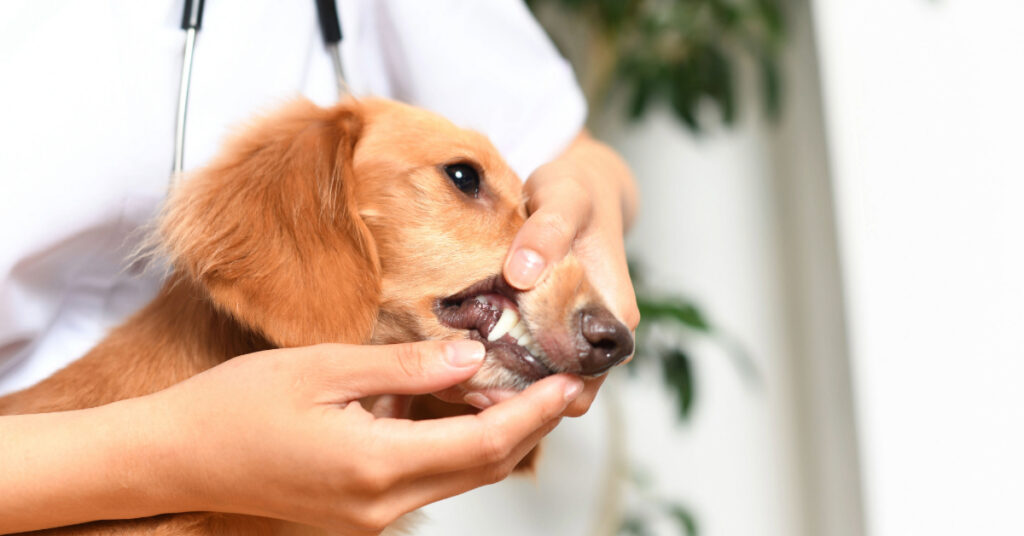
A quick weekly peek at your dog’s gums and teeth can catch problems early. Healthy gums are usually a consistent pink color without swelling, and teeth should be free of heavy brown or yellow buildup. Catching changes early is often what keeps bad breath in dogs from progressing into a larger dental problem.
A few extra products and habits can make at-home care go more smoothly:
- Dog-specific toothpaste in poultry or peanut butter flavors tends to make brushing sessions go more smoothly.
- VOHC-approved dental chews are formulated to mechanically scrape plaque as your dog chews, not just mask odor.
- Rotating chew toys and textures can help reach different areas of the mouth more effectively than one product alone.
Professional Dental Care for Bad Breath in Dogs
Home care goes a long way, but it cannot fully replace professional cleaning, especially once tartar has hardened below the gumline. Addressing bad breath in dogs long-term almost always involves a combination of at-home habits and periodic veterinary attention.
Professional Cleanings and Exams
A professional veterinary dental cleaning removes tartar buildup that brushing alone cannot reach, particularly beneath the gumline where periodontal disease begins. During these visits, our team at Laurel Veterinary Clinic also checks for loose teeth, gum recession, and any growths that might be contributing to bad breath in dogs.
How Often Dogs Need Dental Visits
Most dogs benefit from a professional dental evaluation at least once a year, though smaller breeds and dogs prone to dental disease may need more frequent visits. Age, breed, and diet all factor into how quickly tartar builds back up after a cleaning.
What to Expect at a Dental Visit
A typical dental visit includes an oral exam, a full cleaning under anesthesia for safety and thoroughness, and often dental X-rays to check for problems hiding below the gumline. Owners are usually given a clear picture of their dog’s oral health afterward, along with a personalized plan for follow-up care.
Fresh Breath Starts With a Visit to Laurel Veterinary Clinic
Bad breath in dogs is rarely something to ignore, even when it seems minor. Whether the cause turns out to be everyday tartar buildup or something that needs closer attention, catching it early makes treatment simpler and more affordable. If your dog’s breath has taken a turn for the worse, or if it has just never smelled quite right, our team at Laurel Veterinary Clinic is happy to take a look. Call us at (303) 469-5363 or book an appointment online. A short exam can usually tell us whether we are dealing with routine dental care or something that needs a deeper look, and either way, your dog’s mouth and your morning greetings will thank you.