
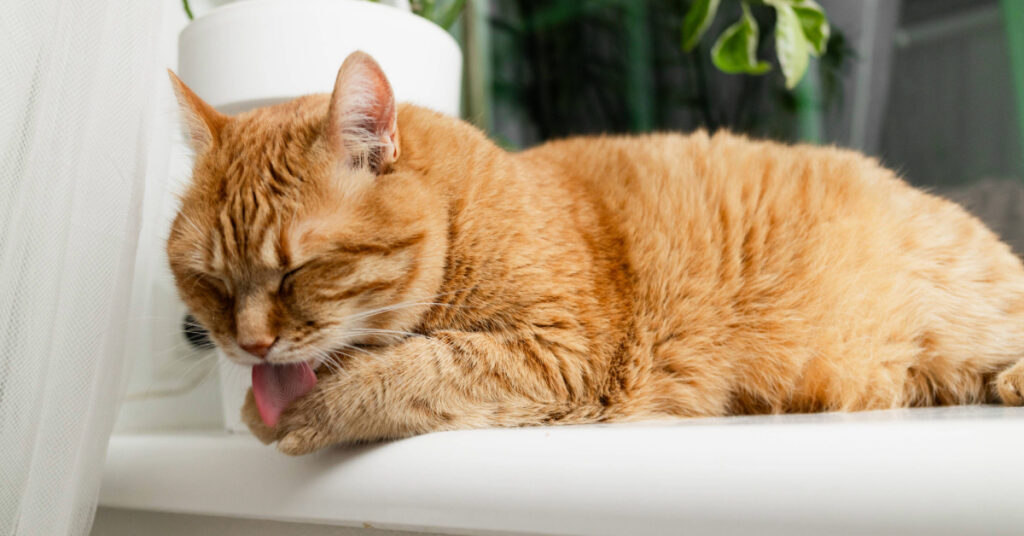
If you share your home with a cat, you’ve probably heard the unmistakable sound of a hairball being expelled at some point. It’s not pleasant for anyone involved, but cat hairballs are a normal part of feline life. That said, there’s an important difference between the occasional hairball and a pattern that signals something more serious. Here’s what every cat owner should know about hairballs, from why they happen to when it’s time to call your veterinarian.
What Is a Cat Hairball?
A cat hairball, known medically as a trichobezoar, forms when a cat swallows loose hair during grooming. Cats have tiny, backward-facing barbs on their tongues that are highly effective at removing dead hair and debris from their coats. The downside is that this same design means swallowed hair gets pulled toward the stomach rather than expelled. Most hair passes through the digestive tract without issue, but some accumulates in the stomach and forms a mass that the cat eventually vomits up.
Despite being called “hairballs,” cat hairballs are usually elongated and tube-shaped rather than round, since they’re formed in the esophagus during expulsion.
Why Do Cats Get Hairballs?
All cats groom themselves, which means all cats are susceptible to hairballs. However, some cats are more prone to them than others. Understanding the factors involved can help you anticipate and manage your cat’s risk.
Coat Length and Grooming Habits
Long-haired breeds like Maine Coons, Persians, and Ragdolls tend to develop cat hairballs more frequently than short-haired cats simply because there’s more hair to swallow. Cats that are fastidious groomers also ingest more hair than those with a more relaxed approach to self-care.
Shedding Season
During periods of heavy shedding, typically in spring and fall, cats may produce more hairballs than usual. The increased volume of loose hair means more hair is being swallowed during daily grooming sessions.
Age and Grooming Changes
Young kittens rarely develop hairballs because they haven’t fully mastered grooming. As cats mature, their grooming efficiency increases, and so does their hairball frequency. Senior cats may also develop changes in grooming behavior that affect how often hairballs occur.
How Often Are Cat Hairballs Normal?
Most veterinarians consider one to two hairballs per month to be within a normal range for cats, though this varies. Some cats go weeks or months without producing one. The key is knowing what’s typical for your individual cat, so you can notice when something changes.
Occasional cat hairballs that are vomited up without difficulty and followed by normal behavior are generally not a cause for concern. Your cat should seem comfortable before and after, and their eating, drinking, and litter box habits should remain unchanged.
When Are Cat Hairballs a Cause for Concern?
While hairballs are a normal feline experience, there are situations where they can point to a more serious problem. Cat owners should be aware of the warning signs that distinguish a typical hairball from one that needs veterinary attention.
Signs That a Cat Hairball May Be a Problem
- Frequent, repeated retching without producing a hairball: If your cat is heaving or gagging repeatedly but nothing comes up, the hairball may be stuck and causing a blockage.
- Loss of appetite: A cat that stops eating, especially alongside frequent retching, may have an obstruction in their digestive tract.
- Constipation or very small stools: Hair that moves into the intestines can contribute to constipation and, in severe cases, blockage.
- Lethargy or unusual behavior: A cat that seems depressed, withdrawn, or unusually inactive may be experiencing discomfort related to a hairball or underlying digestive issue.
- Vomiting without hairball material: If your cat is vomiting frequently but not producing hair masses, hairballs may not be the actual cause, and other conditions should be investigated.
A hairball that cannot be expelled and becomes lodged in the digestive tract is called a gastrointestinal obstruction, and this is a veterinary emergency. If you suspect your cat has a blockage, contact Laurel Veterinary Clinic in Broomfield or an emergency veterinary clinic immediately.
Hairballs vs. Other Causes of Cat Vomiting
Not every instance of cat vomiting is hairball-related. Cats vomit for many reasons, and it’s important not to automatically assume hairballs are the culprit, especially if the vomiting is frequent or contains blood, bile, or food material without any hair present.
Conditions like inflammatory bowel disease, food sensitivities, parasites, pancreatitis, or even hyperthyroidism can cause chronic vomiting in cats. If your cat is vomiting more than once or twice a week on an ongoing basis, it’s worth scheduling an evaluation with your veterinarian rather than attributing it solely to hairballs.
Can You Prevent Cat Hairballs?
While you can’t completely prevent hairballs in cats that groom regularly, there are practical steps that can reduce how often they occur and support your cat’s overall digestive health.
- Regular brushing: Brushing your cat frequently removes loose hair before they can swallow it. This is especially effective for long-haired cats and during shedding seasons. Even short-haired cats benefit from weekly brushing.
- Hairball-formula cat food: Some commercial diets are formulated with added fiber to help move hair through the digestive system more efficiently. Talk with your veterinarian about whether this is a good option for your cat.
- Hydration: Adequate water intake supports healthy digestion and can help hair move through the gut. Many cats prefer flowing water, so a pet fountain may encourage better hydration.
What About Hairball Remedies?
There are many over-the-counter hairball remedies marketed for cats, including lubricating gels and petroleum-based products. While some of these may offer short-term relief, it’s always best to consult with your veterinarian before regularly using any remedy. Using lubricants too frequently or when they aren’t actually needed can interfere with nutrient absorption and overall digestive health.
At Laurel Veterinary Clinic in Broomfield, CO, our veterinary team can help you determine whether a hairball remedy is appropriate for your cat and recommend options that are safe and effective for their specific needs.
When to Take Your Cat to the Vet for Hairballs
We recommend scheduling an appointment if your cat is experiencing any of the following:
- Repeated retching or gagging without producing a hairball
- Reduced appetite, especially lasting more than 24 hours
- Significant changes in litter box habits alongside vomiting
- Vomiting that happens more than once or twice weekly on a consistent basis
- Any signs of distress, pain, or swollen abdomen
What Your Cat’s Hairballs Are Telling You
Cat hairballs are a normal part of life with a feline companion, but they can also serve as an important health signal. When the pattern changes or other symptoms appear alongside them, it’s your cat’s way of telling you something may be off. Our veterinary team at Laurel Veterinary Clinic in Broomfield is always here to help you sort out what’s routine from what needs attention. If you have questions about your cat’s hairball frequency or want to discuss prevention strategies, give us a call at (303) 469-5363 or book an appointment online.