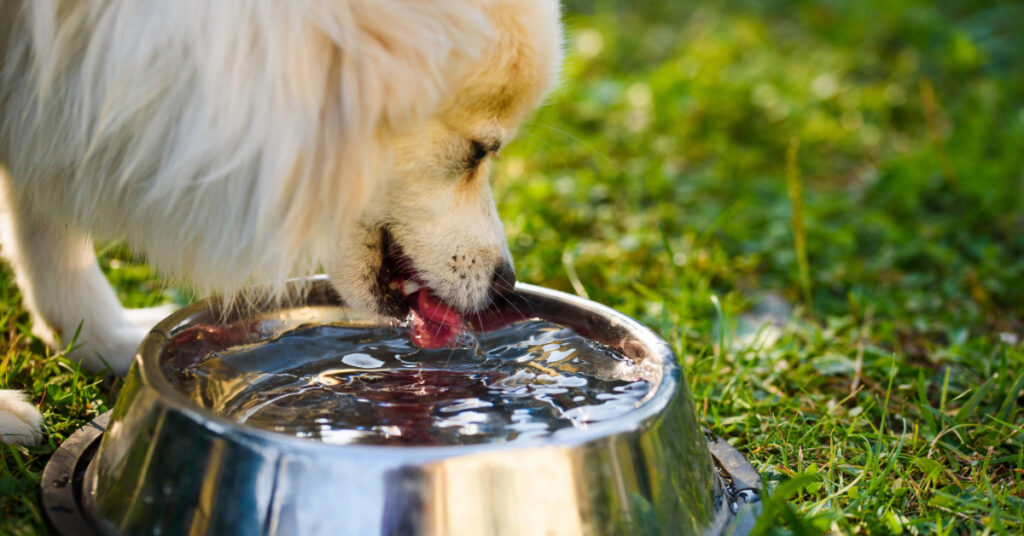
You refill your dog’s water bowl and notice it’s empty again, faster than usual. Or maybe a friend pointed out that your dog seems to always be drinking. If your dog is drinking a lot of water, you might be wondering whether it’s just hot weather or something you should take more seriously. Increased water consumption in dogs, known medically as polydipsia, can sometimes be perfectly normal, but it can also be an early sign of a health condition that deserves attention. Here’s how to tell the difference.
How Much Water Should a Dog Drink?
Before you can determine whether your dog is drinking too much water, it helps to know what a healthy intake looks like. As a general guideline, dogs should drink approximately one ounce of water per pound of body weight each day. A 40-pound dog might drink around 40 ounces, or about five cups, of water daily under normal circumstances.
That said, water intake naturally varies based on activity level, diet, weather, and overall health. Dogs eating wet food tend to drink less because they get moisture from their meals. Dogs on dry kibble typically need to drink more. If your dog is drinking significantly more water than their baseline, that’s worth paying attention to.
Normal Reasons a Dog Might Drink More Water
Not every increase in water intake signals a problem. There are several everyday explanations for a dog drinking lots of water that don’t require a vet visit.
- Hot weather or increased exercise: Dogs drink more when they’re hot or physically active. If your dog has been more active than usual or it’s been a warm week in Broomfield, increased thirst is expected and healthy.
- Diet changes: Switching from wet food to dry kibble, or adding more salty treats, can increase how much water a dog needs.
- Stress or anxiety: Some dogs drink more water in response to emotional stress or environmental changes.
- Medications: Certain drugs, including prednisone and other corticosteroids, are known to cause dogs to drink lots of water as a side effect. If your dog recently started a new medication and their thirst has increased, this is likely the reason.
When Is a Dog Drinking Lots of Water a Concern?
When a dog is drinking excessive amounts of water without a clear lifestyle explanation, and especially when that increased thirst is paired with increased urination (a condition called polyuria), it’s important to have them evaluated by your veterinarian at Laurel Veterinary Clinic. These two symptoms together often point to an underlying condition that requires diagnosis and treatment.
Medical Conditions That Cause Increased Thirst in Dogs
Several health conditions can cause a dog to drink a lot of water. Some of the most common include:
- Diabetes mellitus: Dogs with diabetes have difficulty processing glucose, which leads to elevated blood sugar and, in turn, excessive thirst and urination. This is one of the most frequently seen causes of increased water intake in dogs.
- Cushing’s disease (hyperadrenocorticism): This hormonal disorder causes the adrenal glands to overproduce cortisol. Increased thirst, increased urination, a pot-bellied appearance, and hair loss are hallmark signs.
- Kidney disease: The kidneys play a central role in water balance. When they’re not functioning properly, dogs may drink more water to compensate. Kidney disease is especially common in older dogs.
- Liver disease: The liver is involved in many metabolic processes, and disease here can cause increased thirst and other systemic symptoms.
- Pyometra: In unspayed female dogs, a uterine infection called pyometra is a serious and life-threatening condition, and increased water consumption is one of its signs.
- Hypercalcemia: Abnormally elevated calcium levels in the blood, which can result from various causes including certain cancers, can lead to excessive thirst in dogs.
Is My Dog Drinking Lots of Water Because of Stress?
Stress-related drinking is real in dogs, though it tends to be less dramatic than medically-driven thirst. A dog going through a major change, like moving to a new home, losing a companion animal, or adjusting to a new schedule, may drink more as a behavioral response. If the increased drinking corresponds to a known stressor and resolves once the dog settles, it’s likely behavioral rather than medical. However, if the drinking doesn’t return to normal within a few days, a check-in with your veterinarian is a good idea.
Signs That Your Dog’s Increased Thirst Needs a Vet Visit
Schedule an appointment at Laurel Veterinary Clinic in Broomfield, CO if your dog is drinking lots of water and you’re also noticing any of the following:
- Frequent urination, especially accidents in the house from a previously housetrained dog
- Weight loss despite a normal or increased appetite
- Lethargy, weakness, or reduced energy
- Vomiting or changes in appetite
- A swollen or rounded abdomen
- Changes in coat quality or skin condition
What to Expect at the Vet
When you bring your dog in for excessive drinking, your veterinarian will start by gathering a thorough history, including when you first noticed the change, how much they appear to be drinking, and any other symptoms you’ve observed. Diagnostic testing typically includes bloodwork and a urinalysis, which can identify many of the most common causes of increased thirst in dogs. Additional imaging or more specialized testing may be recommended depending on initial results.
The good news is that many conditions causing a dog to drink a lot of water are manageable with appropriate veterinary care. Early detection makes a meaningful difference in outcomes, which is why not ignoring changes in thirst is so important.
A Change in Thirst Is Worth a Conversation
If your dog is drinking more water than usual and you’re not sure why, trust your instincts. You know your dog’s habits better than anyone, and noticing a change is the first step toward getting answers. Our team at Laurel Veterinary Clinic in Broomfield is here to help you figure out what’s behind your dog’s increased thirst and make sure they get the care they need. Call us at (303) 469-5363 or book an appointment online!